
Respect the Distance
by Eleanor E.
A common sentiment among those of us in the triathlon community is a sense of both disbelief and appreciation for how one’s perception of distance changes over time. Many of us reflect on our first experiences in triathlon with a sense of humble nostalgia. We remember training for our first sprint triathlon, doubting that we could run a 5K after biking for 12 miles. We remember running our first 10K, wondering why anyone would willingly run this far. We remember swimming our first 500 yards, out of breath and questioning why we decided to take up swimming as an adult.
Personally, I always think back to my first Experience Triathlon (ET) Sunday group ride in 2023. I started training with ET and had met Coach Joe through Masters Swim a few months prior. Coach Joe told me about the Sunday group rides and encouraged me to attend. When I asked about the distance, I remember feeling overwhelmed at the idea of biking 30 miles straight. Still, I showed up for the group ride unsure about my abilities, knowing that this would be my longest bike ride to date. To say that this ride was challenging is an understatement. I struggled to keep up with the group, and I remember how discouraged and miserable I felt throughout the entire experience.
The funny thing about training though is that when you show up and do the work, it gets easier over time. I could’ve decided that I was done after one ride and I would stick to shorter race distances. I decided to keep showing up and the rides got easier, and more fun, throughout my first summer with ET. That summer, I also had the chance to surround myself with people who were training for 70.3 and full-distance Ironman races. I remember the feeling of admiration I had for my teammates, while also thinking that they were insane for calling a 50-mile bike ride “short.” I never thought that I would get to a point where I could complete, let alone train for, these races.
For the past decade, I’ve struggled with chronic knee injuries that have greatly impacted my ability to run long distances. For a while, I had resigned myself to sprint and Olympic triathlons; anything longer was impossible due to my inability to run beyond a 10K. As with the group rides, consistently showing up and doing the work helped me improve the longevity of my runs. Over many months of consistent training, running got easier and I could run further than I ever thought possible. Suddenly, a 70.3 didn’t seem out of the question.
In 2024, I completed my first Ironman 70.3 in Madison. While the run was challenging, I got through it and ran most of the half-marathon. One of my favorite memories of this race was yelling “I’m still running!” to my husband and Tom (my training buddy) around mile 11 of the race. With the help of my ET community, better advice, and a consistent training schedule, the doors started to open to longer race distances. Suddenly, a marathon didn’t seem out of the question.
In 2025, I ran my first marathon. One of my goals for that year was to push my endurance and complete each of the Ironman distances (2.4-mile swim, 112-mile bike, & 26.2-mile run) individually. That summer, I completed the swim, rode the entire Ironman Wisconsin bike course, and started training for this hypothetical marathon. In the fall of 2025, I slowly increased my running distance, and my knees tolerated the mileage well. Before I knew it, 12 miles felt like a “short” run. I signed up for a 20-mile race to test my endurance, and the race went very well. I decided to go for a backyard marathon a few weeks later. With my husband and friends acting as my aid stations, I ventured off on the Fox River Trail to run my first marathon.
I wish I could say that this was a great experience, but I struggled during this run. My heart rate never relaxed, and I started experiencing some nausea at the half-way point. I wanted to quit and be done at mile 20, but Tom wouldn’t let me stop. He ran with me for the remaining 6.2 miles and pushed me to finish what I started. I am so grateful that he did because, while it wasn’t a great run by any means, I proved to myself that I could run a marathon. Suddenly, a full-distance Ironman didn’t seem out of the question.
So that brings us to this past year of Ironman training. Overtime, your perception of distance changes. Before I knew it, I was one of those people who rejoiced when I “only” had a 50-mile ride on my training plan. When training for my first Ironman, it became very easy for me to lose perspective of what constitutes “long” distances and forget about where I started. Every time I felt frustrated about my pacing, unsatisfied about my athletic performance, or upset about not reaching the unrealistic goal I had set for myself, I lost sight of where I started. I forgot about the version of myself from 3 years ago that cried with joy when I ran an entire10K post injury. I forgot about the version of myself that thought a 70.3 was impossible. I forgot about the journey that led me to considering an Ironman was within my realm of possibilities.
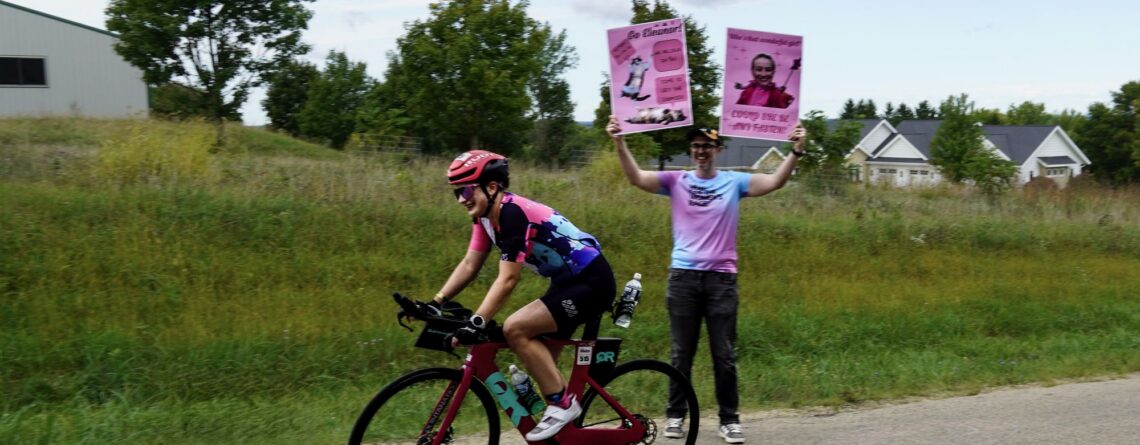
After years of preparation and a busy summer of training, I finished my first Ironman in Madison on September 13th, 2026. In all honesty, I don’t think I have fully processed this achievement yet. The race went very well, all things considered; I stuck to my racing plan, surpassed my expectations on the bike, and even managed to smile for a few pictures. One of the best parts of this race was training alongside my ET community and the friendships that grew this past summer. Despite this, I catch myself falling into the same mental trap of only focusing on what I could’ve done differently and what needs to be improved for the next race. It becomes very easy for me to lose perspective of the growth I’ve demonstrated over the past few years.
In the Ironman and endurance world, you hear a lot about “respecting the distance.” For many, this adage translates to an acknowledgement of the dedication and humility required to race long-distances. It emphasizes the importance of racing “smart:” following a pacing plan, fueling consistently, and accepting that long-distance races cannot be underestimated. For me, respecting the distance means that I not only do my best to prepare and go into race day with a healthy mindset, but I hold reverence for the journey itself. I remember where this journey started and how I’ve grown not just in my athletic abilities, but in what I believe I can achieve. There’s an entire world of endurance events out there, and I can’t wait to push my body in ways I would’ve thought were impossible three years ago. While I still continue to struggle with my mindset, I’ve discovered that never losing sight of where I started helps keep my journey in perspective. As I reflect on my Ironman Wisconsin experience, I am reminded of the importance of holding humility, appreciation, and respect for the distance and the journey itself.